

Overview
Most legal problems in a business cost little to prevent and a great deal to fix. The partnership agreed over coffee. The lease signed without reading clause 14. The business bought in a hurry that turned out to carry the seller's tax history. Each began as paperwork nobody wanted to pay for.
We act for owners of small and mid-sized businesses across Mississauga, the GTA and Hamilton — at incorporation, when owners write down the rules between them, when a deal is on the table, and when something has gone wrong. You get the trade-offs in plain language; the decision stays yours.
How we help

Incorporating your business
Incorporating is more than a filing. You adopt articles, settle the share structure, issue shares, appoint directors, pass by-laws and open a minute book. The share structure matters most: dividing ownership at the start is easy, and changing it once the business has real value rarely is.

Shareholder and partnership agreements
The agreement between owners decides who makes which decisions, how and to whom shares can be sold, what happens if an owner dies, leaves or stops contributing, and how a deadlock is broken. Without one you fall back on statutory defaults written for corporations in general, not yours.

Buying or selling a business
We act on either side, from letter of intent through due diligence to closing — structuring the deal as a share or asset purchase, drafting the agreement, and negotiating the representations, warranties and indemnities that decide who carries which risk after closing.
Commercial contracts and leases
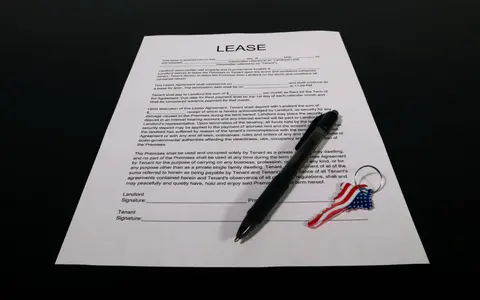
Supplier and customer terms, service agreements, confidentiality agreements, contractor terms — read before you sign, when the words can still be changed. A commercial lease is nothing like a residential one, and the Residential Tenancies Act does not apply. We check rent escalations, the operating costs charged back to you, renewal rights, assignment if you sell, and whether the landlord wants you to sign personally.

Employment basics for owners
Written offers, contractor-or-employee questions, termination clauses that survive a challenge, and the workplace policies Ontario requires once you reach certain staff numbers. Non-competes with employees are now prohibited apart from narrow exceptions. Employment standards are a floor you cannot contract below; a clause that tries usually fails.

Minute books and annual filings
The minute book, the registers of directors, shareholders and individuals with significant control, and the annual return. Dull work, until a buyer, a bank or a tax authority asks to see it and nobody can find it. Reconstructing missing resolutions mid-deal is slow, costly and avoidable.

Owner and shareholder disputes
When owners fall out, the corporate statutes give real remedies — including the oppression remedy, which lets a court step in where conduct unfairly disregards someone's interests. We read your agreement and the corporate records first, because what is written down usually decides how strong your position is.
How it works
- 1
Tell us what the business does
A short call about what you sell, who owns it, who works there and what is coming next. Most of what we need comes out in that first conversation.
- 2
We map the structure and the risks
The choices in plain words — entity, ownership split, which agreements matter now and which can wait. Trade-offs, not a recommendation you cannot question.
- 3
We put the documents in place
Incorporation and organization, the shareholder agreement, the contracts, the deal documents — drafted, negotiated and explained before signature rather than after it.
- 4
We keep it current
Annual returns, minute book updates, a new hire, a second location, a lease renewal. One lawyer who knows the file, rather than explaining the business again each time.
Should you incorporate provincially or federally?
Both routes create a corporation: a separate legal person that can own property, sign contracts and generally keep business debts away from your personal assets. Two differences matter.
Federal incorporation under the Canada Business Corporations Act clears your name nationally, which is worth something if you plan to trade across the country. Here is the part almost everyone gets wrong: it does not let you skip provincial registration. Corporations Canada says plainly that provincial law still requires a federal corporation to register in each province and territory where it will conduct business — Ontario included.
Directors are the other real difference. Ontario repealed its resident-Canadian director requirement on 5 July 2021, so an Ontario corporation can have a board with no Canadian residents at all. Federally, at least 25 per cent of directors must be resident Canadians, and on a board of fewer than four, at least one. If your owners live outside Canada, that point alone often settles it.
What should a shareholder agreement actually cover?
There is a simple test. Read it and ask whether it answers what you would be arguing about if you and your partner stopped speaking tomorrow. If it does not, it is decoration.
A workable agreement deals with who appoints directors; which decisions need every owner rather than a majority; restrictions on selling to outsiders, with rights of first refusal and drag-along and tag-along rights; what happens on a death, disability or departure, and how those shares are valued and paid for; whether owners can be made to put in more money; and how a deadlock is broken — by a shotgun clause, mediation or arbitration.
A unanimous shareholder agreement, signed by every shareholder, goes further and shifts some of the directors' powers to the shareholders themselves. That changes who really runs the corporation and moves the responsibility with it, so understand it before signing.
Share sale or asset sale — why do the two sides want opposite things?
In a share sale the buyer buys the corporation itself. Everything inside comes along: the contracts, the licences, the staff, the premises — and equally the debts, the tax history and the claim nobody has brought yet.
In an asset sale the buyer picks the pieces it wants — equipment, inventory, customer lists, the name, goodwill — and leaves the corporation, and generally its liabilities, with the seller.
So the sides pull in opposite directions. Buyers usually prefer assets, because unknown problems stay behind. Sellers usually prefer shares, for the clean break and for tax reasons that belong with your accountant rather than with us.
Neither structure is automatically right. Contracts that cannot be assigned without consent, leases, licences and employee arrangements often push a deal one way whatever the parties preferred. Structure is settled early, in the letter of intent — have that conversation first.
What can you do if a business partner is acting unfairly?
Start with the documents. The shareholder agreement, the by-laws, the minutes and the share register answer more than people expect, and decide whether you have a contract claim, a corporate one, or both.
Ontario's Business Corporations Act gives the court a broad power known as the oppression remedy. It is brought by a "complainant": a current or former registered holder or beneficial owner of shares, a current or former director or officer, or anyone else the court decides is a proper person to apply — which is how creditors sometimes get in.
The court can act where conduct is oppressive, unfairly prejudicial to, or unfairly disregards the interests of a security holder, creditor, director or officer. The relief is unusually wide: an order that your shares be bought, that directors be replaced, that the articles or a unanimous shareholder agreement be amended, or that the conduct stop. Court is slow, so we look hard at a buy-out or mediation first.
How we charge
Most business work is billed by the hour against a retainer — a sum paid up front, held in trust and drawn down as work is done, with an account showing what was done and how long it took. Where a job has clear edges, such as an incorporation, we can quote a fixed fee.
Either way the fee structure goes to you in writing before we start: what is covered, what would be extra, what disbursements to expect. The first 30-minute consultation is free, and if you do not need a lawyer yet we will say so.
What you end up with
A business whose paperwork matches how it actually runs. That is what a buyer, a bank or a judge looks at, and it turns a disagreement into a clause you can point to rather than a story you must prove.
- A corporation set up under the statute that suits your plans
- A written agreement between owners covering exit, deadlock and death
- Contracts and leases you understood before signing
- A minute book that survives due diligence
Dates owners get caught by
None of these look urgent on their own. They get expensive the moment a deal or a claim turns on them.
- Registering in Ontario before you carry on business here — A federal corporation may operate anywhere in Canada, but provincial law still requires it to register in each province where it conducts business. Do the Ontario filing before you open, not after someone notices.
- Annual returns — Ontario corporations file an annual return through the Ontario Business Registry within six months of their fiscal year-end, and changes to registered information are due within 15 days.
- Your register of individuals with significant control — Since 1 January 2023, privately held Ontario corporations must keep a register of the people who really control them, review it yearly and update it within 15 days of learning of a change. Federal corporations must also file that information with Corporations Canada.
- Two years to bring a claim — Ontario's basic limitation period is two years, running from the day the claim was discovered rather than the day of the contract. Unpaid invoices age faster than owners expect.
Why Lexwood Law
- Saturday appointments between 10 and 3, so a meeting need not cost you a working day
- Trade-offs explained in plain language — the decision stays yours
- The fee structure in writing before any work starts
- Nine practice areas under one roof: the lease, the will and the work permit for a key hire
- Service in English, Urdu, Hindi and Punjabi
Common questions
Should I incorporate at all?
It depends on your liability exposure and where the business is heading. A corporation is a separate legal person, so its debts generally stay with it — though lenders and landlords often ask owners to sign personally, which removes much of that shield. It also changes your tax position, so ask your accountant.
What should a shareholder agreement cover?
Who decides what, which decisions need every owner rather than a majority, how and to whom shares can be sold, what happens on death, disability or departure, how those shares are valued and paid for, and how a deadlock gets broken.
Share sale or asset sale?
Buyers usually prefer assets, because unwanted liabilities stay behind with the seller's corporation. Sellers usually prefer shares, for the clean break and for tax reasons your accountant should explain. Contracts that cannot be assigned, leases and licences often decide it anyway.
Do I really need a minute book?
Yes. An Ontario corporation must keep its articles, by-laws, minutes and resolutions, and registers of directors, securities, land interests and individuals with significant control, at its registered office or another Ontario address the directors pick. It is the first thing a buyer asks for.
Provincial or federal — which should I choose?
Federal incorporation clears your name across Canada; an Ontario corporation is simpler if you operate mainly here. Federal does not remove provincial registration — you still register in every province where you carry on business. Director residency differs too.
Do I need a Canadian-resident director?
Not for an Ontario corporation: that requirement was repealed on 5 July 2021. Federally, at least 25 per cent of directors must be resident Canadians, and where a corporation has fewer than four directors, at least one of them must be.
Can you review a contract before I sign?
Yes, and it is far less work than arguing about the same clause afterwards. Once your signature is on it, the options narrow to whatever the words already say.
My business partner and I have stopped agreeing — what now?
We read the shareholder agreement and the corporate records first; they usually decide your position. Options run from a negotiated buy-out, to mediation or arbitration if the agreement requires it, to an oppression application in court — the slowest route, and rarely the first.
This page is general information, not legal advice. Every matter is different — book a consultation for advice on your situation.