

Overview
A family matter is rarely only a legal problem. You are making decisions about your children, your home and your income at the point when you have the least energy to make them.
Our job is to take the legal weight off you. We tell you where you stand, what a realistic outcome looks like, and what it is likely to cost — before you commit to anything.
Most matters settle. Some do not, and we are ready either way.
How we help

Separation agreements
A separation agreement is a written contract settling parenting, support and property so both of you can move forward with certainty. Ontario requires a domestic contract to be in writing, signed and witnessed. It also needs full financial disclosure and independent legal advice on each side — an agreement missing those is far easier to challenge later.
Divorce applications
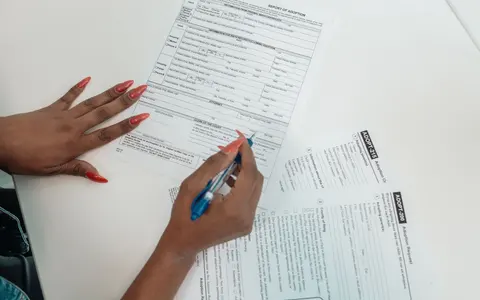
Canada has no-fault divorce. The usual ground is simply that you have lived separate and apart for at least one year, and you do not need your spouse to agree. An Ontario court can hear it if one of you has lived in the province for at least a year. We handle simple, joint and contested applications.

Parenting time and decision-making responsibility
Since March 2021 the Divorce Act no longer uses "custody" and "access". It uses parenting time — the time a child spends in your care — and decision-making responsibility for the significant questions about school, health and upbringing. We help you build a parenting plan that fits your children's actual week rather than a template.

Child support
Child support belongs to the child. The Federal Child Support Guidelines set a table amount driven by the paying parent's income and the number of children, with certain expenses shared in proportion to income. Where parenting time is close to even, a different calculation applies. We make sure the income figure is right before anything is signed.

Spousal support
Spousal support is a two-part question. First, is there an entitlement at all — from the roles you each took, from a contract, or from need. Only then do amount and duration come in, where the Spousal Support Advisory Guidelines produce ranges. They are widely used but they are not law, and a range is a starting point rather than an answer.

Property division and equalization
Married spouses in Ontario divide the growth in their property through equalization of net family property: broadly, the spouse whose net worth grew more during the marriage pays the other half the difference. The family home carries its own rules that can move the number considerably. Careful disclosure is where this is won or lost.

Common-law and unmarried couples
Living together does not create the property rights marriage does. Common-law partners are outside Ontario's equalization scheme, so a property claim usually runs on unjust enrichment — that you contributed and your partner kept the benefit. Support is a separate question, and it is far more accessible than a share of property.

Cohabitation and marriage contracts
A cohabitation agreement or marriage contract sets the ground rules while things are calm, which is the only time they can be set calmly. They matter most when one of you brings a business, a property, or children from an earlier relationship. Ontario limits what they can cover — decision-making about children cannot simply be contracted away.

When safety is a concern
The Divorce Act defines family violence broadly, and a court must weigh it in every parenting decision. If you have concerns, tell us early — it changes how a file is run and what we ask a court for. Ontario funds family court support workers for people going through family court in this situation. In an emergency, call 911.
How it works
- 1
The free consultation
Thirty minutes, no charge. You tell us what has happened and what you want. We tell you what the law does with that, and what a realistic range looks like.
- 2
Disclosure
Family law runs on financial information. We help you assemble yours and press for theirs, because no agreement is safe if the numbers underneath it are not.
- 3
A plan in writing
Your options, the likely cost of each, and our recommendation. Nothing is filed and nothing is signed until you have decided.
- 4
Negotiation or mediation
Most files resolve here. We put a proposal on the table, deal with the response, and keep the temperature low enough that agreement stays possible.
- 5
Court, where it is needed
If the other side will not move, or safety is an issue, we bring or defend the application and argue it. That call is made on the merits, not reflexively.
Do we have to go to court to separate?
Usually not. You are separated when you begin living separate and apart — there is no form to file and no judge involved in that step. What needs sorting out is everything that follows: parenting, support and property. All of that can be settled in a written agreement.
The Divorce Act now places a duty on the parties to try to resolve matters through a family dispute resolution process, to the extent that it is appropriate to do so. Negotiation and mediation both count. It is not appropriate in every case — where there is family violence or a serious imbalance of power, court can be the safer route.
You do still need a court order to be divorced. In an uncontested matter, that is paperwork rather than a hearing.
How are child support and spousal support worked out?
Child support comes first and is the more predictable of the two. The Federal Child Support Guidelines set a table amount based on the paying parent's income and the number of children. On top of that, particular expenses — child care, some health costs, post-secondary education — are shared in proportion to each parent's income.
Where each parent has the child at least forty per cent of the time over a year, the calculation changes: the court works from both parents' table amounts and the increased cost of that arrangement.
Spousal support works differently. Entitlement is decided first, and only then do the Advisory Guidelines suggest ranges for amount and duration. Establishing the right income figure, particularly for someone self-employed, is often the real work.
What rights do common-law partners have in Ontario?
Fewer than most people assume, and the gap is widest on property. Equalization applies to married spouses. Common-law partners do not automatically share the growth in each other's property, and furniture and household items generally belong to whoever bought them.
What a common-law partner can bring is a claim in unjust enrichment — that you contributed, your partner was enriched, and there was no legal reason for them to keep the benefit. The Supreme Court of Canada has set out how these claims work for unmarried couples, including a share of the wealth built together where the relationship was effectively run as a joint family venture.
Spousal support is more accessible: three years of living together, or a relationship of some permanence where you have a child together.
Can I move away with my children?
Not on your own decision, once an order or agreement is in place. The Divorce Act requires notice of a relocation at least sixty days before the move, in the required form, and the other parent then has thirty days to object.
If it is contested, the court decides on the child's best interests, and who has to prove what depends on the arrangement you already have. Where parenting time is substantially equal, the moving parent must show the move is in the child's best interests. Where one parent has the child the vast majority of the time, the other parent must show that it is not.
A smaller move that will not significantly affect the child's relationships still requires notice of your new address and contact details.
What happens to the family home?
The matrimonial home gets treatment no other asset does. Both married spouses have an equal right to stay in it until it is dealt with, whatever the title says, and neither can sell or mortgage it without the other's consent.
It also changes the arithmetic. Property you owned on the date of marriage is normally deducted from your side of the equalization calculation — but not the home the family was living in. Its full value is shared, even if you owned it before the marriage, inherited it, or received it as a gift.
That one rule moves more money in Ontario family files than almost any other, which is why the home deserves advice before you agree to anything.
What this will cost
You get a written fee structure before you decide. Some family work suits a flat fee — an uncontested divorce, a cohabitation agreement, a straightforward separation agreement. Contested matters are generally hourly, because nobody can honestly price a file whose length the other side controls.
You get an estimate rather than a shrug, and we say so when a step will cost more than it can win. The 30-minute consultation is free.
What resolution actually looks like
Most family matters end in a signed agreement rather than a judgment. A good one is specific enough that you rarely have to ask each other what it means.
- A parenting plan built around your children's real week
- Support figures based on income that has actually been verified
- Property and the family home dealt with, in writing
- A divorce order when you are ready for one
- An agreement drafted to hold, with disclosure and independent legal advice on both sides
Dates that matter
Family law has fewer hard deadlines than some areas, but the ones it has are unforgiving. These are the dates worth writing down.
- One year of separation — The usual ground for divorce is having lived separate and apart for at least one year, though you can start the application before the year is up. Short attempts at reconciliation totalling no more than ninety days do not restart the clock.
- Equalization of net family property — An equalization claim must generally be brought within six years of separation or two years of the divorce becoming final, whichever comes first, and within six months of a spouse's death.
- Notice of relocation — At least sixty days before a move that will significantly affect a child's relationships, in the required form. The other parent then has thirty days to object.
- The Mandatory Information Program — Once a family court case starts in Ontario, each party must attend a free information session no later than forty-five days afterwards.
- When the divorce takes effect — A divorce takes effect on the thirty-first day after the judgment is granted, unless it is appealed. You are not free to remarry before that day.
Why Lexwood Law
- Saturday appointments between 10 and 3, so a meeting need not cost you a day of work
- A written fee structure before you commit, not an invoice that surprises you
- Service in English, Urdu, Hindi and Punjabi
- One lawyer across nine practice areas — your separation, your will and your next home do not need three firms
- Straight answers about the realistic outcome, including when settling beats fighting
Common questions
Do we have to go to court?
Most matters settle by negotiation or mediation, and the Divorce Act now asks parties to try a family dispute resolution process where it is appropriate. You do still need a court order to be divorced.
How is support calculated?
Child support follows the Federal Child Support Guidelines — the payor's income and the number of children, plus a proportionate share of certain expenses. Spousal support turns on entitlement first, then on the Advisory Guidelines ranges.
What rights do common-law partners have?
No automatic share in property: equalization applies to married spouses only. A property claim generally runs on unjust enrichment. Spousal support is available after three years together, or sooner where you have a child together.
Can I move away with my children?
Not without notice. A relocation that will significantly affect the child's relationships needs at least sixty days' written notice, and the other parent has thirty days to object. If contested, the court decides on the child's best interests.
Do I need to prove my spouse did something wrong?
No. Canada has no-fault divorce, and the usual ground is one year of living separate and apart. Adultery and cruelty remain grounds, but are rarely worth the cost and conflict of proving.
How long does a divorce take?
An uncontested divorce is often a matter of months, depending on the court's pace and how complete the paperwork is. Contested matters depend on the issues. We set expectations at the first meeting.
What happens to the matrimonial home?
Both married spouses have an equal right to stay in it regardless of title, and neither can sell or mortgage without the other's consent. Its full value is shared on equalization, even if one of you owned it first.
Can my spouse and I use the same lawyer?
No. A lawyer cannot act for both sides. Independent legal advice on each side is also what makes an agreement hold up if it is challenged later, so it protects the deal as well as you.
This page is general information, not legal advice. Every matter is different — book a consultation for advice on your situation.