

Overview
A rental dispute is rarely only about money. For a tenant it is the home they live in. For a landlord it is often a mortgage on a property they cannot afford to carry empty. Both sides usually arrive certain the other broke the rules, and both are usually working from something they read online rather than from the Residential Tenancies Act.
We act for landlords and for tenants. That means telling a landlord when a notice will not survive a hearing, and telling a tenant when they do not have the claim they think they have. Neither is pleasant to hear, and both are cheaper than finding out at the Board — where cases turn on paperwork and dates more than on who behaved worse.
How we help

For landlords: rent arrears and the N4
When rent goes unpaid the process starts with an N4, the Notice to End your Tenancy Early for Non-payment of Rent. The amount, the rental period and the termination date must all be right, because a small error sinks the application that follows. If the tenant pays everything owing before you file, the notice is void.

For tenants: an N4 has arrived
An N4 is not an eviction, and you do not have to leave on the date written on it. Pay the arrears plus any rent since fallen due before your landlord files and the notice is void — the tenancy simply continues. A partial payment does not void it, though the Act allows later chances to pay.

For landlords: N12 for your own use or a purchaser's
An N12 ends a tenancy so you, a buyer, or a close family member can move in. It takes at least 60 days' notice ending on the last day of a rental period, plus one month's rent in compensation by that date. The Board tests whether the intention is genuine, so build the file first.

For tenants: a notice you believe is a pretext
If a landlord serves an own-use or renovation notice and then re-rents at a higher price, that is what people mean by a renoviction. A former tenant can generally apply within a year of moving out; remedies include the rent difference, moving costs, compensation and a fine. These cases turn on evidence, so keep the dates.
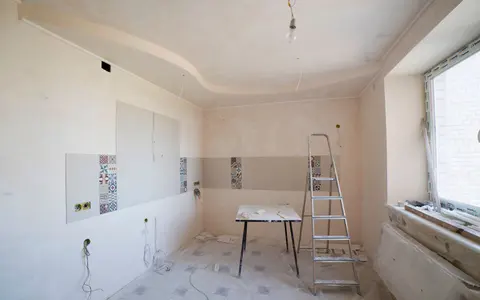
For landlords: N13 for demolition, conversion or major repairs
An N13 requires at least 120 days' notice. Compensation is three months' rent where the complex has five or more units and one month's where it has fewer, and a tenant who gives written notice before leaving keeps the right to move back at the same rent. These notices attract close scrutiny.

For tenants: repairs that are not getting done
A landlord must keep the unit in a good state of repair and meet health, safety and maintenance standards, whether or not the problem existed when you moved in. Withholding rent is not the remedy and usually makes things worse. The remedy is an application to the Board, won on written requests and dated photographs.

For landlords: rent increases done correctly
Rent can generally rise once every 12 months, on at least 90 days' written notice, using the required form. For most units the increase is capped at the provincial guideline for that year. Where you have paid for major capital work you can apply for an above-guideline increase — but you cannot simply charge it.

For tenants: entry, privacy and harassment
A landlord may enter, but on terms: in most cases at least 24 hours' written notice stating the reason, the day, and a time between 8 a.m. and 8 p.m., with narrow exceptions for emergencies. Repeated entry without notice, pressure to leave, or cutting off a service is not a grey area, and the Board can order a remedy.
How it works
- 1
Tell us which side you are on
Call and describe what has happened, what has been served and when. Most of what we need is dates. The 30-minute consultation is free.
- 2
We read the notice and the file
We check the form, the grounds, the calculation and the service against the Act. It is cheaper to find a fatal defect now than at the hearing.
- 3
We file or we respond
If you are applying, we prepare and file the application with its evidence. If you are answering one, we gather what the Board actually wants to see.
- 4
We represent you at the hearing
We attend and argue your case, having told you beforehand what the realistic outcomes are. Where a payment agreement is the better result, we say so.
Can a landlord evict a tenant without going to the Board?
No, and this is the single most important rule in Ontario residential tenancy law. Only the Landlord and Tenant Board can order an eviction, and only the Court Enforcement Office — the Sheriff — can enforce that order. A landlord cannot change the locks, remove belongings, cut off a service, or treat the tenancy as over because a notice was served.
For tenants, a notice is a step in a process, not the end of one. For landlords, self-help is the most expensive route available: a locked-out tenant can apply to be let back in and compensated, maximum fines under the Act rose on 1 July 2026, and none of it recovers your rent.
How do rent increases actually work?
For most units three rules apply together. Rent can go up only once in any 12-month period; only on at least 90 days' written notice in the required form; and only by the provincial guideline for the year the increase takes effect. The guideline is set annually from the Ontario Consumer Price Index and is capped at 2.5 per cent.
For 2026 the guideline is 2.1 per cent, and Ontario has announced 1.9 per cent for 2027. Because it resets every year, confirm the current figure on ontario.ca rather than relying on a number printed anywhere else, this page included. And not every unit is covered: one first occupied for residential purposes after 15 November 2018 is exempt, although the notice and once-a-year rules still apply.
What happens between a notice and a hearing?
The shape is the same whichever side you are on. A notice is served. If nothing is resolved, an application follows — an L1 for rent arrears, an L2 for most other landlord grounds, or a tenant application such as a T2 about tenant rights or a T6 about maintenance. The Board schedules a hearing, both sides put in evidence, and an adjudicator decides.
Timelines vary a great deal, so anyone quoting you a firm date is guessing. What both sides control is whether the file is ready: correct form, correct dates, proof of service, and evidence organised in advance rather than recalled from memory. Applications fail on paperwork more often than on the merits.
The rules keep changing — which ones apply to me?
Ontario has amended the Residential Tenancies Act repeatedly and is not finished. Measures from the Helping Homebuyers, Protecting Tenants Act, 2023 and the Fighting Delays, Building Faster Act took effect on 1 July 2026 — among them a shorter window to ask the Board to review an order, and higher maximum fines. The Board says further changes from those bills take effect in September 2026.
A bill passing is not the same as a rule being in force; provisions are often proclaimed in stages. Practically, the rule that governs is the one in force on the day the notice was served — so before serving a notice, or assuming one is invalid, confirm what is actually in force.
What it costs
We quote the way that fits the matter: a flat fee where the scope is clear, such as preparing a notice and application, and hourly where it is not. You get the structure in writing first.
Board filing fees are set by the Board and separate from legal fees. The 30-minute consultation is free, and if the amount at stake does not justify representation we say so.
What a good outcome looks like
Rarely dramatic. For a landlord it usually means possession or payment obtained lawfully. For a tenant it means staying, or leaving on terms with the compensation the Act provides.
- A notice and application that hold up under scrutiny
- Arrears recovered, or a realistic payment agreement
- A tenancy preserved, or an orderly move with what is owed
- Repairs ordered, or an abatement for the months without them
Dates that decide cases
Every rule below is a deadline and the Board applies them strictly. Some changed in 2026, so confirm what was in force the day the notice was served.
- N4 — non-payment of rent — At least 14 days after the notice is given for a monthly or yearly tenancy, and at least 7 days for a daily or weekly one. It is void if the tenant pays the arrears before the landlord files.
- N12 — landlord's, purchaser's or family member's use — At least 60 days' notice ending on the last day of a rental period, with one month's rent in compensation due by that date.
- N13 — demolition, conversion or major repairs — At least 120 days' notice. Compensation is three months' rent in a complex of five or more units, one month's in a smaller one, plus a right to return after repairs where the tenant gives notice first.
- Rent increases — At least 90 days' written notice in the required form, and at least 12 months since the tenancy began or the last increase.
- Bad-faith claims — A former tenant generally has one year from moving out to challenge a notice that was not genuine, and two years where refused the unit back after repairs.
Why Lexwood Law
- We act for landlords and for tenants, and tell each side what the law allows rather than what they hoped
- Notices, calculations and service dates checked against the Act before anything is filed
- Saturday appointments between 10 and 3, when most offices are closed
- Service in English, Urdu, Hindi and Punjabi
- A written fee structure before you decide, after a free 30-minute consultation
Common questions
How long does the LTB take?
Timelines vary a great deal with the Board's caseload, so a firm number would be a guess. Filing correctly the first time avoids the adjournments that cause most delay.
Can a landlord evict for personal use?
Yes, where the landlord, a purchaser or a close family member genuinely intends to move in. It takes an N12 with at least 60 days' notice ending on the last day of a rental period, plus one month's rent in compensation.
How much can rent go up?
For most units, by the guideline for the year it takes effect — 2.1 per cent for 2026, 1.9 per cent announced for 2027. Check ontario.ca for the current year. Units first occupied after 15 November 2018 are exempt.
My tenant will not pay — what is the first step?
A correctly completed N4. The arrears figure, the rental period and the termination date must all be right, because errors here end applications. If the tenant pays everything owing before you file, it is void.
Can I change the locks if my tenant stops paying?
No. Only the Board can order an eviction and only the Sheriff can enforce it. A lockout exposes you to an order letting the tenant back in, and to a fine.
I think my N12 is really about raising the rent. What can I do?
Raise it at the hearing, or apply afterwards if you have moved out — generally within a year. Keep the listing, photographs and dates. If the landlord never moved in, the Board can order compensation.
My landlord will not do repairs — what can I do?
Put the request in writing, keep dated photographs, then apply to the Board. Do not withhold rent: it creates no leverage and can expose you to an N4.
Is my unit covered by rent control?
If it was first occupied for residential purposes after 15 November 2018 it is generally exempt from the guideline, though the 90-day notice and once-a-year rules still apply.
This page is general information, not legal advice. Every matter is different — book a consultation for advice on your situation.